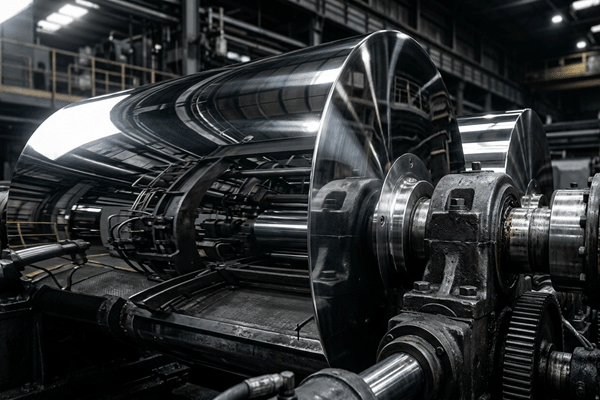
In the manufacturing of high-technical plastic sheets and film rolls — including Acrylic, PET, PVC, and especially Polycarbonate (PC) — the surface quality of the calendering roller plays a critical role in determining the final product's market value. A roller that falls short of the required optical-mirror finish will instantly transfer surface defects onto the extruded plastic sheet.
These defects can include haze, micro-scratches, orange peel texture, waves, and light refraction errors. For high-end applications demanding total transparency — such as light guide plates, optical lenses, or premium display screens — the surface finish of the calendering roller must reach an extreme optical-grade mirror finish with a roughness limit of Ra = 0.005 μm.
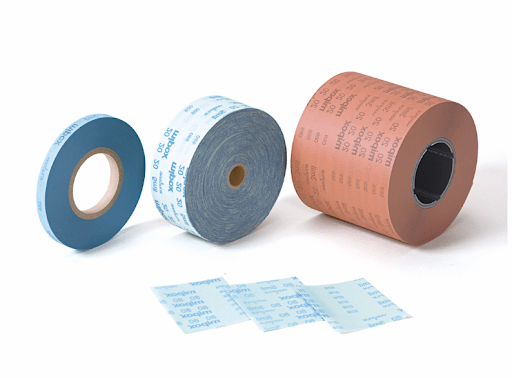
Conquering this rigorous benchmark requires a well-calibrated, step-by-step super-finishing process combined with high-performance abrasive materials. This article introduces the advanced technical solution delivered by the specialized Mipox VARIOFILM and Polishing Film system.
I. Standardized Step-by-Step Grit Sequence
To safely transform a roller surface from a rough-ground state to a flawless optical mirror finish, the process must strictly follow a progressive reduction in abrasive grain sizes.
Note: To prevent surface defects, grit steps must always move continuously from coarse to fine. Mixing micron scales with industrial JIS grit numbers can cause accidental reverse-scratching and undo previous work.
1. Normal Requirement — Standard Mirror Finish
Application
Standard calendering rollers for Acrylic, PET, and PVC sheets
Surface Roughness Target
Ra 0.01 – 0.03 μm
Grit Sequence
60 μm
→
30 μm
→
15 μm
→
9 μm
↓
1 μm (VARIOFILM)
→
WA3000
→
WA8000-FB
2. High Requirement — Optical Mirror Finish
Application
Premium PC and high-end Acrylic rollers demanding absolute total transparency
Surface Roughness Target
Ra = 0.005 μm (extreme limit)
Grit Sequence
60 μm
→
30 μm
→
15 μm
→
9 μm
↓
1 μm (VARIOFILM)
→
WA600
→
WA1000
→
WA2000
↓
WA3000
→
WA8000-FB
II. 7 Golden Technical Principles for Machine Operation
Having a precise grit sequence is only half the battle. Machine operators must strictly adhere to the following 7 equipment setup principles to prevent surface defects during operation.
1
Uniform Scratch Patterns
Ensure scratch lines at each step are completely uniform through visual inspection under standardized lighting. No deep scratches from the previous grit must remain before advancing to the next step.
2
Localized Rerun
If a specific area is found to be under-polished or defective, perform a local rerun for that section before proceeding to finer grits.
3
High Head-to-Roll Pressure (Approx. 8 kg)
Maintain high polishing head pressure stabilized at around 8 kg. An obvious darkening of the film tape after it passes the work zone indicates optimal abrasive cutting performance.
4
High Tape Tension
Keep tape tension high from feed spool to rewind spool to ensure the film remains completely taut, flat, and free of wrinkles or slippage.
5
Filtered Water Cooling
Always use clean, chilled water to dissipate heat and flush away swarf. The water supply must pass through a fine filter unit to prevent contaminants from causing reverse scratching.
6
Strict Dust Control & Clean Environment
The environment surrounding the polishing machine must be kept pristine and dust-free. A single dust particle trapped under the WA10000 super-finishing film can instantly ruin the entire process.
7
High Roller Rotation Speed
Operate the roller at a high rotation speed, with exact RPM adjusted flexibly based on the specific diameter of the roller being processed.
III. Core Technology & Characteristics of VARIOFILM
When a polishing machine operates under harsh conditions — 8 kg high treading pressure and high rotation speeds — conventional sandpapers or lower-grade films easily tear, causing deep scratches. VARIOFILM serves as an irreplaceable cornerstone for the initial grit sequence due to its proprietary technological characteristics.
Electrostatic Application Method
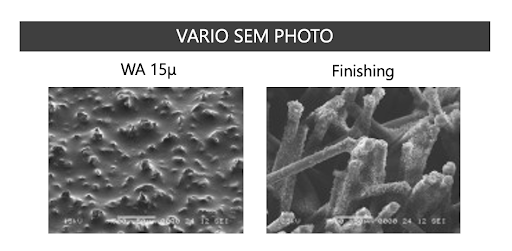
Polishing particles are coated onto a smooth, strong polyester film substrate using the electrostatic application method, achieving a uniform thickness and optimal grain orientation for a consistent, reliable finish.
Micro-Level Controlled Abrasive Grains
Abrasive particles are controlled to the micron level, providing precise polishing and eliminating unpredictable scratch depths on the roller's surface.
High-Durability Resin Bond
An adhesive with excellent water and oil resistance is used, providing outstanding durability in both wet and dry polishing applications.
Anti-Slip Backside Treatment
The back side of the film is treated with an anti-slip coating to enhance grip, preventing film slippage or tracking errors during high-tension roll-to-roll feeding operations.
Conclusion & Benefits
Implementing the full-spectrum VARIOFILM & Polishing Film technical solution — following standardized grit sequences and operational disciplines — empowers precision machine shops to seamlessly achieve Ra = 0.005 μm. This advanced system completely eliminates orange peel texture and micro-scratches, significantly elevating the market value of high-end calendering rollers while minimizing product rejection rates.
Contact us today to request a Sample Test and receive direct technical consultation from our engineering experts.
No,470