

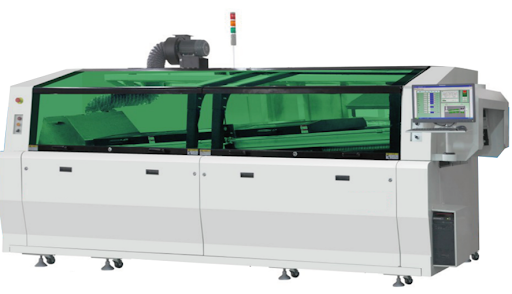
In Surface Mount Technology (SMT) assembly, the reflow oven is one of the most critical processes in forming reliable solder joints. It is a multi-zone thermal system designed to heat solder paste according to a controlled temperature profile, creating permanent electrical and mechanical connections between electronic components and the Printed Circuit Board (PCB).
Although significant attention is often placed on stencil printing accuracy and component placement precision, the quality of the final solder joint ultimately depends on the stability and consistency of the reflow process. Without proper maintenance, gradual thermal deviations and contamination inside the oven can negatively affect product quality, process stability, energy efficiency, and production uptime.
目次
1. Preventing Thermal Drift and Heating Degradation
Reflow soldering depends on maintaining a precise thermal profile — including controlled ramp-up, soak, peak, and cooling stages. Over time, heating elements, thermocouples, and convection blower systems may degrade or drift from calibration, leading to non-uniform heating and a range of soldering defects.
2. Controlling Flux Residue Accumulation
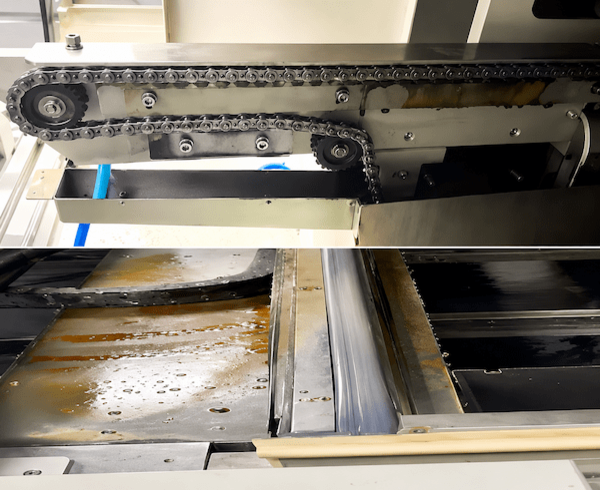
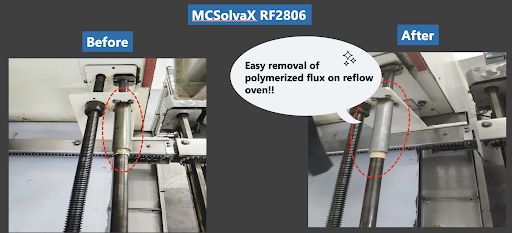
During reflow, solder paste flux evaporates and generates airborne residues inside the oven chamber. If the exhaust and filtration systems are not cleaned regularly, these residues accumulate on chamber walls, nozzles, blowers, and conveyor systems.
3. Reducing Energy and Nitrogen Consumption
Reflow ovens are among the highest energy-consuming machines in an SMT production line. Poor maintenance conditions can significantly reduce thermal efficiency and increase operating costs.
In nitrogen reflow systems, nitrogen gas reduces oxygen concentration inside the oven chamber, minimizing oxidation during soldering. However, degraded door seals, chamber leaks, or unstable airflow conditions can allow excess oxygen to enter the oven — causing the control system to compensate by increasing nitrogen flow, resulting in higher gas consumption and unnecessary costs.
4. Minimizing Unplanned Downtime
In many SMT production environments, the reflow oven represents a critical bottleneck process. An unexpected oven failure can stop the entire production line and potentially damage boards already inside the heating chamber. Preventive maintenance programs allow activities to be scheduled during planned downtime rather than active manufacturing periods.
Typical Preventive Maintenance Schedule
Conclusion
Reflow oven maintenance should not be treated as a reactive task performed only after failures occur. It is a critical preventive activity that directly affects solder joint quality, manufacturing yield, energy efficiency, and production continuity.