

目次
Overview of Polishing in the Repair Process
There are many stages in automotive repair where polishing comes into play. Narrowing it down broadly to "bodywork," "painting," and "other," there are as many as eight representative processes.
In repair-centered markets, the bodywork processes in particular increase. This is because tasks unnecessary in replacement work — such as "shaping the cut section" and "smoothing weld beads" — become necessary.
2Weld bead finishing
4Feather edging
5Putty sanding
6Primer surfacer sanding
7Topcoat polishing
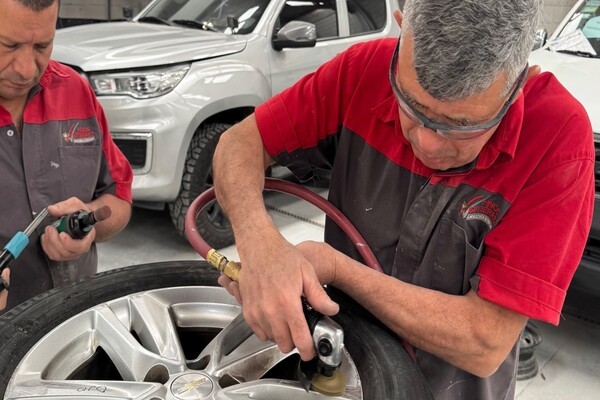
Bodywork Polishing — Preparing the Base Material
Traditionally, deburring after cutting and weld bead finishing were commonly done by grinding away material quickly with flap discs and similar tools. While this secures material removal, it tends to leave deep scratches behind. As a result, more putty is often needed, and additional DA sander work is required — ironically increasing the burden on later stages (overwork).
Especially with high-tensile steel and aluminum, excessive heat generation risks causing warping and base material degradation.
In repair-centered markets, "reducing the burden on later processes" becomes a more important criterion than simply "how much material can be removed."
Paint Process Polishing — Determining the Final Finish
Paint process polishing is common to both replacement-centered and repair-centered markets. Processes such as primer surfacer sanding, removing imperfections (bug/dust nibs), and pre-buffing adjustment are critical steps that determine the final finish.
However, in repair-centered markets, the quality of polishing at the bodywork stage directly affects the paint process. If deep scratches remain at the base material stage, more putty must be applied, which in turn increases the number of polishing steps required.
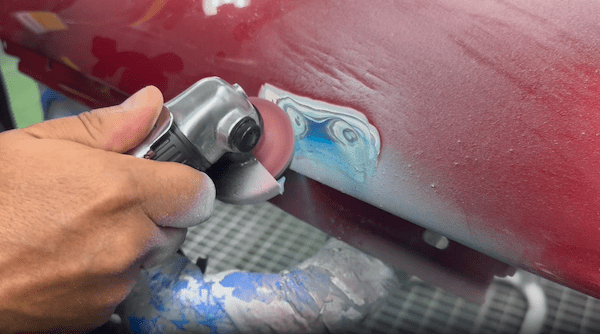
"Scratch Depth" Rather Than "Grit Number"
When choosing abrasive materials, most shops start from the question "which grit number should I use?" However, when looking at the repair process as a whole, a more important question is: "how deep will the scratches be after this process?"
If deep scratches remain, the next process must start over with a coarser grit. Conversely, if scratch depth can be properly controlled, the entire workflow proceeds smoothly. CESVI Colombia has also indicated that selecting tools with less heat impact contributes to stable quality — this is not a matter of speed, but a matter of controllability.
Conclusion
Polishing in the repair process is broadly involved, from bodywork to painting to wheel repair. In markets where repair work increases, the number and scope of these processes expand as well. What matters most in this context is not the choice of grit number, but the perspective of "how to control scratch depth."
No,509