

目次
Change doesn't happen all at once
In Central America's woodworking market, quality doesn't improve through sweeping equipment overhauls — it improves through the steady accumulation of small changes. Most workshops face real constraints on capital investment, and their operating environments aren't always stable.
Because of this, the common approach isn't to overhaul an entire process at once. Instead, workshops review one part of the process at a time and improve how existing tools and methods are used — a gradual, step-by-step approach.
Education is what creates change
In this environment, simply supplying a product isn't enough to create change. What matters are educational activities — demonstrations, hands-on instruction, and ongoing follow-up.
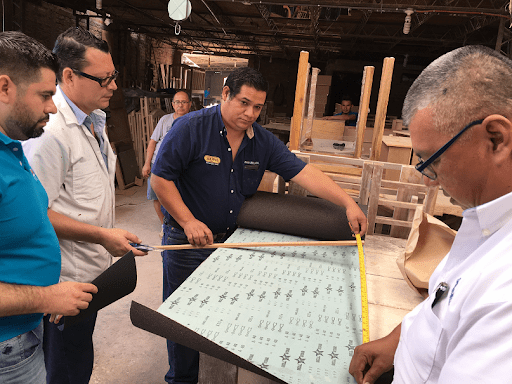
This process takes time, but once it takes hold, it becomes the workshop's new standard and the foundation for continuous improvement.
It isn't just handing over a product — teaching how to use it is what actually starts the change.
Different time horizons
In this market, steady, long-term improvement is valued over short-term results. It isn't flashy performance that earns trust — it's the ability to keep using something reliably over time. This isn't simply a matter of preference; it reflects the underlying structure of the market itself.
Chase short-term results, and workshops quickly revert to their old methods. Only by taking the time to let a change take root does improvement become the new standard on the floor.
Three conditions for improvement to take hold
Improvement works in this market because three elements come together.
This isn't just a technique — it's a feature rooted in the structure of the market itself. When all three come together, improvement stops being a one-off event and becomes the foundation for sustained growth.
Conclusion
Improvement in Central America's woodworking market isn't built through sweeping equipment investment — it's built through the accumulated efforts of education, the field, and time. Simply supplying a product isn't enough: sharing how to use it, and staying engaged until it takes hold, is what ultimately makes improvement work in this market.
No,515