

Introduction
Walking through woodworking markets and hardware stores in Central America, you notice something interesting. Users don't simply treat abrasive materials as "consumables" — they see them as important tools that shape the sense of work and the quality of the finish.
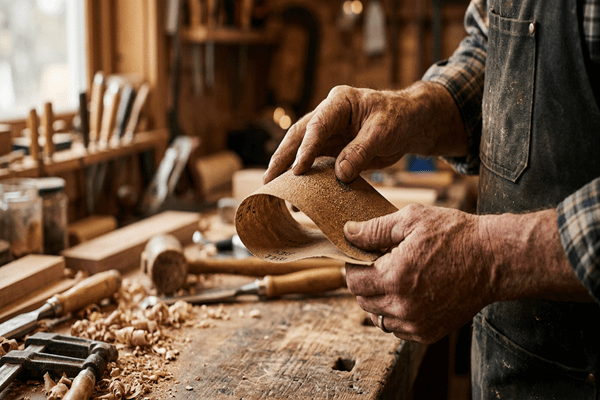
One woodworking craftsman, gently flexing a piece of sandpaper between his fingers, explained, "This one's too stiff," and "This one conforms nicely to the wood." There, the selection criteria weren't just grit number or price — "feel" was clearly part of the judgment.
The Structure of Coated Abrasives
At a glance, coated abrasives look like a simple product. In reality, though, they are a "composite material" made up of several combined components.
Among these, the bond is especially critical. Many manufacturers combine phenolic resin, epoxy resin, urethane, and other materials, engineering the balance between cutting durability, flexibility, workability, and cost.
Why "Feel" Is Valued
In the abrasives market, attention tends to focus on grain type and grit number. But on the actual work site, there are evaluation criteria that specs alone can't measure.
Especially in woodworking, the material itself is never uniform. Wood grain, humidity, hardness, and coating condition all cause the working feel to constantly change. Because of this, there is value that simple spec competition alone cannot explain.
The True Value of Abrasive Materials
Abrasive materials are not simply "tools for cutting." They are products that function within a relationship between the hand, the material, and the process.
For this reason, they must be designed with consideration not only for raw performance, but also for the environment in which they're used, who will use them, and what kind of feel is being sought.
The true value of an abrasive cannot be fully captured on a spec sheet. As the Central American market shows, a product's value only truly emerges at the moment a craftsman's hand meets the material.
No,522