

Introduction
Looking closely at the woodworking market in Central America, you sometimes encounter interesting scenes. On the same shelves as the latest automotive refinishing abrasives and high-performance waterproof sandpaper, you'll still find "garnet products" and "hide-glue-based coated abrasives" sitting there as a matter of course.
Local carpinteros (woodworkers) use them naturally, saying things like "this suits the wood" or "we need this kind of softness." What we found there wasn't a case of something "surviving because it's old" — it was a product still being chosen for reasons rooted in today's market environment.
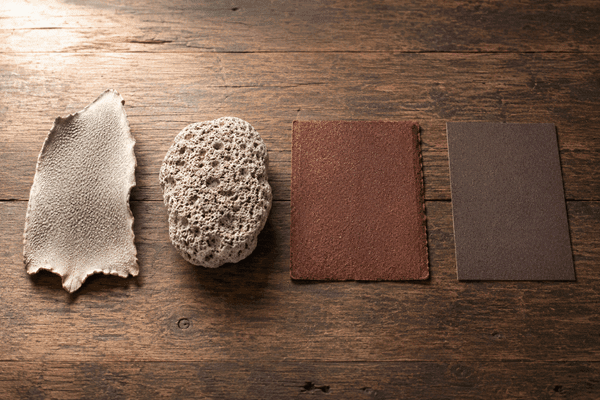
The evolution from sharkskin to modern sandpaper
Tracing the history of abrasives, humanity spent a long time refining surfaces using natural materials. In ancient times, materials such as sharkskin, pumice, emery, and flint were used as abrasive materials.
Resin held overwhelming industrial rationality. As a result, most coated abrasives were converted to resin, and traditional hide-glue products largely disappeared from the mainstream market.
Why hide-glue products never fully disappeared
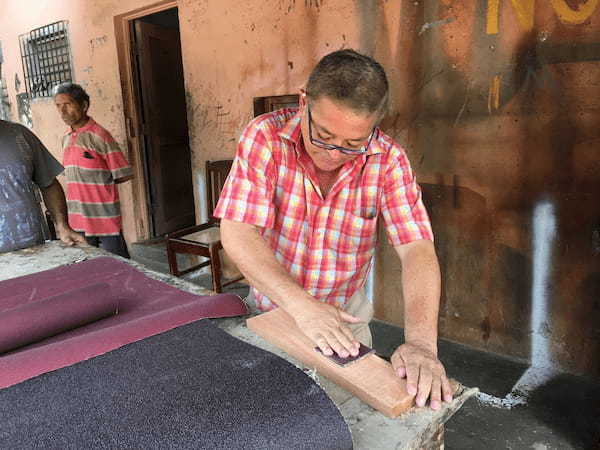
Even after resin products came to dominate the market, some hide-glue and garnet products never completely vanished. In the woodworking market especially, they continue to receive steady support today. One reason is their "followability."
What the coexistence of technology and the field reveals
The shift to resin was a major advance for the abrasives industry. Much of today's high-performance abrasive technology exists because of it.
At the same time, the market doesn't always choose only the "newest technology." In real-world settings, multiple factors — material properties, logistics environments, work habits, and human sensory judgment — intertwine in complex ways.
The newest technology and traditional technology coexisting within the same market — perhaps that's exactly where the fascination of the abrasives world lies: in this "diversity of optimal solutions."
No,523