

In printed circuit board (PCB) assembly, wave soldering pallets continuously accumulate burnt flux, resin residues, and solder dross. Cleaning these fixtures is essential for maintaining production precision, but chemical procurement and disposal add up to a significant operating expense.
Switching from legacy methods, such as straight isopropyl alcohol (IPA) or pre-mixed, ready-to-use (RTU) solvents, to a high-concentration semi-aqueous formulation like Mipox MCSolvaX addresses these costs directly. By optimizing the dilution ratio, electronics manufacturers can reduce chemical expenditure by up to 50% (depending on operating conditions) while improving cleaning efficiency and operator safety.
目次
1. Direct Savings via Higher Concentration
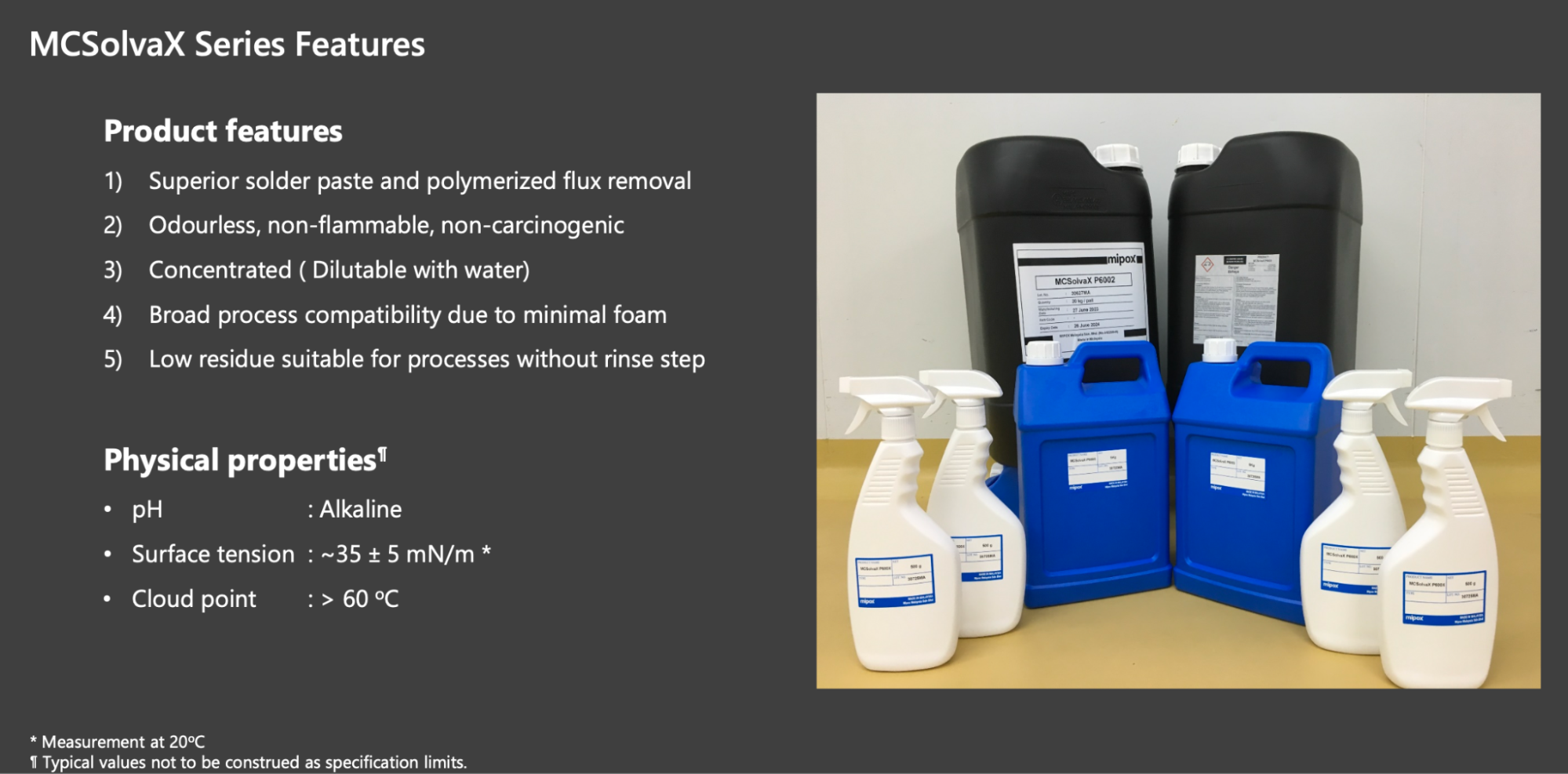
Conventional wave pallet cleaners are frequently delivered ready-to-use at low active concentrations, or rely on straight IPA. Mipox MCSolvaX, by contrast, is engineered as a water-dilutable, semi-aqueous concentrate. It is low-odor, non-flammable, and non-carcinogenic, and it removes solder paste and polymerized flux effectively.
2. Why Dilution Control Matters for Cost Optimization
Running at an unmonitored or incorrect dilution ratio leads to unnecessary waste or secondary production costs. The comparison below shows how each scenario affects operations and cost.
Note that 10–15% is a practical target for typical flux loads. The product's recommended dilution range is 10–25%, so adjust within that range to suit your flux and process.
3. Extended Bath Life and Reduced Waste Disposal
The economics of wave pallet cleaning extend beyond the initial chemical purchase.
4. Enhanced Safety and Pallet Longevity
A dilutable, water-based system like Mipox MCSolvaX also offers indirect financial protection.
Its low-foaming formulation also makes it compatible with a wide range of processes, and its low residue suits processes that omit a rinse step.
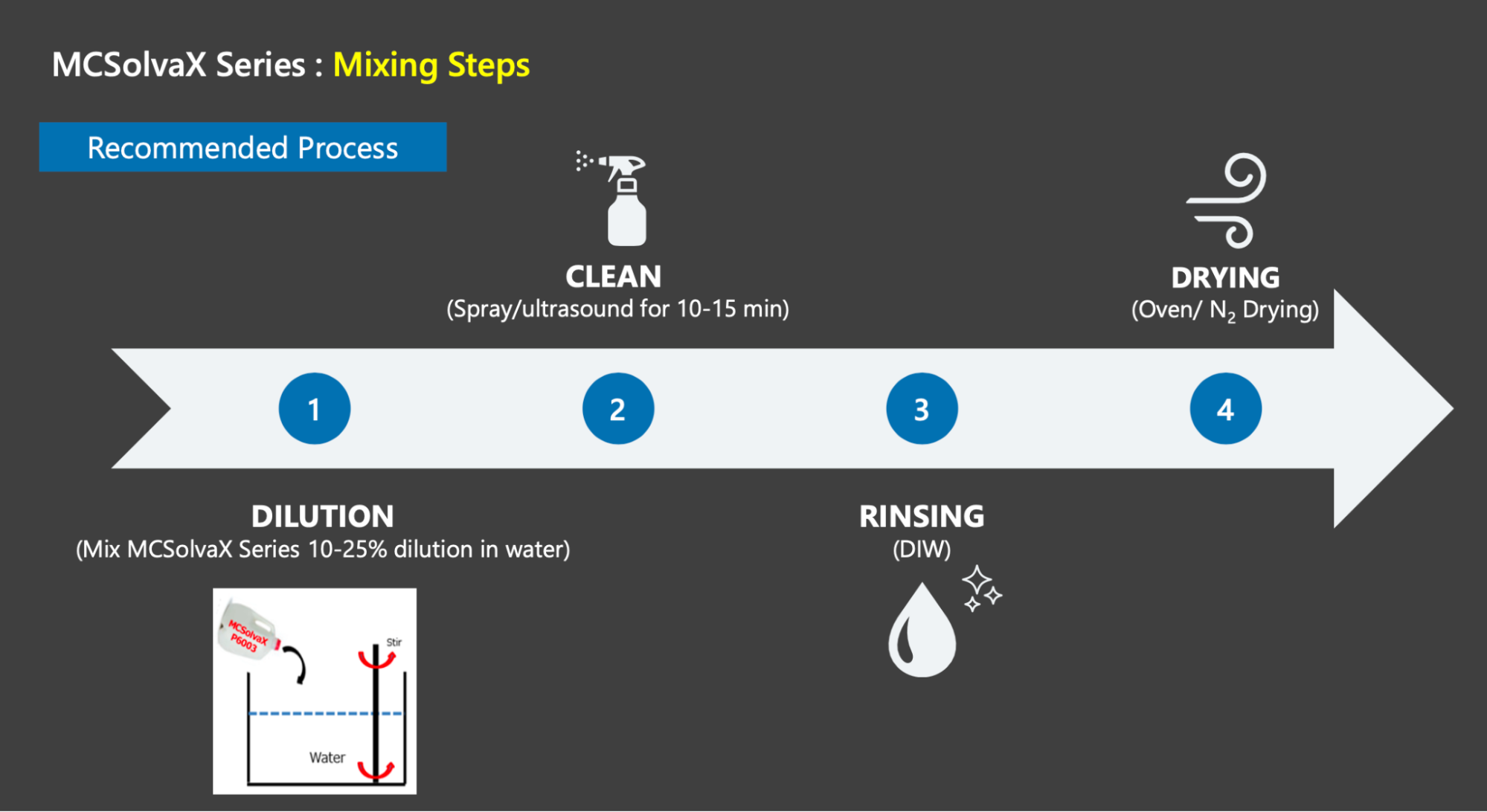
5. Recommended Process with MCSolvaX
The recommended process consists of four steps.
Conclusion
To achieve up to a 50% cost reduction in wave pallet maintenance, focus on four points.
Standardize the dilution ratio. Target the minimum effective concentration for your flux solids, typically 10–15% for spray-in-air or ultrasonic cleaning.
Implement dosing systems. Use automated proportioners or refractometers to hold concentration steady and avoid chemical overuse.
Monitor bath filtration. Integrate inline filtration to catch loosened flux solids and extend tank turnover intervals.
Prioritize occupational safety. Moving from flammable solvents such as IPA to water-based or semi-aqueous alternatives reduces fire hazards near high-temperature wave soldering areas while protecting fixture materials.